



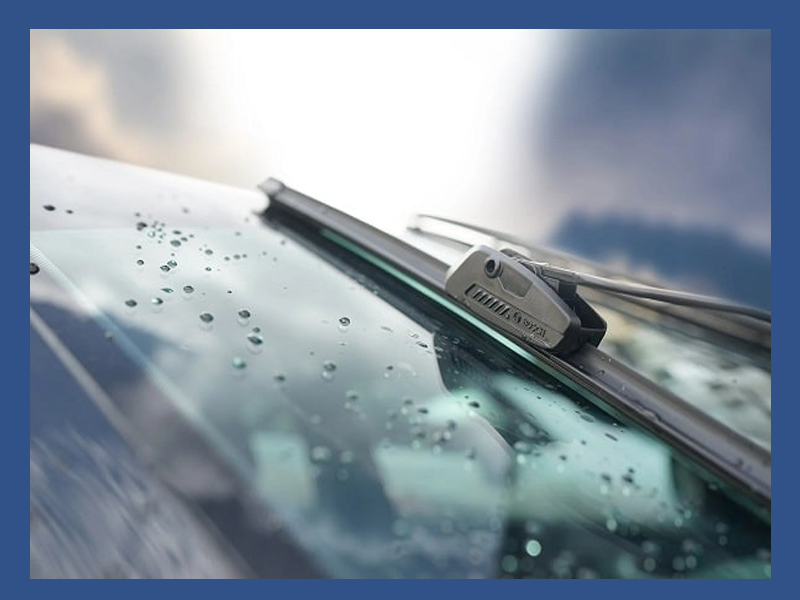
Early windshield wipers were operated manually by moving a lever inside the cabin, but today electric wipers are common. When they are operating at high speed, they are really fast. Now let’s see what mechanism can move the wiper arms so well and powerfully?
In this article, we will take a look inside the structure of the windshield wiper, we will talk about the blades and control buttons, and we will get acquainted with a new system that is sensitive to rainfall.
How the wiper works:
The wiper works with two mechanical processes:
• A combination of an electric motor and a worm gear that provide power to the wipers.
• A coupling that converts the rotational force of the electric motor into the reciprocating motion of the wiper.
To move the wiper blades across the glass, and at this speed, we need a lot of force. To produce this force, a helical gear is attached to a small electric motor. This gear can increase the torque of the motor by about 50 times, but at the same time slows down the motor’s rotation speed by 50 times.
The force from the “helical gear” is transmitted to a coupling that moves the wipers back and forth. In between, there is also an electronic circuit that detects when the wipers are lowered. This circuit powers the wipers until they stop at the bottom of the window, at which point it cuts off the power flow. A small rod is attached to the motor’s output shaft, and as the motor’s output shaft rotates, this small rod moves a larger rod back and forth. The larger rod is connected to another short rod that moves the wiper blades.
How Wiper Blades Work:
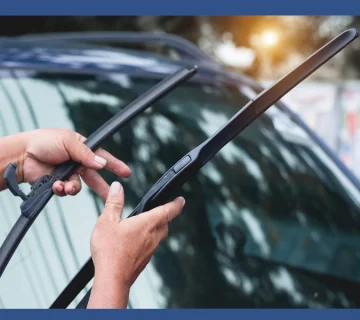
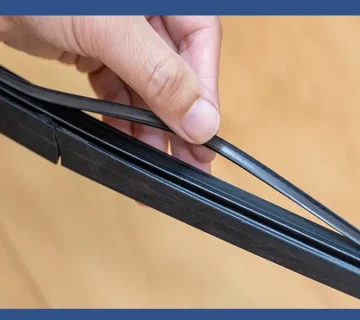
Wiper blades look like rubber tees. A thin rubber strip is attached to a handle and wipes water off the glass. When the blades are new, the rubber is smooth and has no cracks or gaps, and it wipes water away without leaving any marks. As the blades get old, cracks and gaps develop on them, causing a build-up of grime on the blade. This grime prevents the blade from sticking to the glass properly and leaves marks on the glass. Sometimes, you can wipe the blades with a cloth soaked in glass cleaner to extend their life.
Another way is to increase the pressure of the blade on the glass. The blades are designed to have the most grip in the middle, but because the blade is so long, there are actually six to eight points of contact with the glass. If ice or snow builds up on the blades, it causes the blade to not apply the same pressure to all points, leaving marks on the glass.
How a tandem system works:
The wiper design on most cars is the same, with two blades working together to clear the windshield. One blade is on the driver’s side and the other is in the middle of the windshield. This is called a tandem system.
This system works to clear most of the windshield in the driver’s field of vision. Other cars may have different designs. Mercedes-Benz uses single-arm wipers that travel across the entire windshield. This design provides good coverage, but it is much more complicated than the standard two-arm system. Some cars use wipers on both sides of the windshield, while others have single-arm wipers in the middle of the windshield. Neither of these designs cover as much of the driver’s field of vision as the standard two-arm system.
Wiper settings:
Most wipers have low and high speeds and on and off settings. When the wipers are running at low or high speeds, the motor is constantly running, but you can set them to stop for a few moments after each wipe.
Whatever settings your car has, you need to set the wiper speed correctly. If the speed is too low, raindrops will blind you. Of course, it should be taken into account that when the car’s speed decreases or increases, the amount of water sprayed on the windshield also changes, so you should pay attention to adjusting the wiper speed. The wiper lever has the following positions:
OFF (OFF).
Automatic speed (AUTO).
Slow speed (I).
Fast speed (II).
In fact, automakers have solved this problem with rain-sensitive wipers.
Rain-Sensing Wipers
In the past, automakers have tried to either eliminate the wipers or make them so that their speed can be controlled automatically. Some of the designs that were presented for this purpose had to calculate the vibration produced by each raindrop that hit the glass. This required a special coating on the glass that would prevent raindrops from forming or could create ultrasonic vibrations on the glass to break up the raindrops so that they would no longer need to be wiped. But these systems either never reached production or were stopped soon after they started because they were a nuisance to drivers rather than a help.
After a while, a new type of wiper was introduced to the market that could detect the amount of water hitting the glass very well. One such system is made by TRW Inc., which uses sensors


بدون دیدگاه